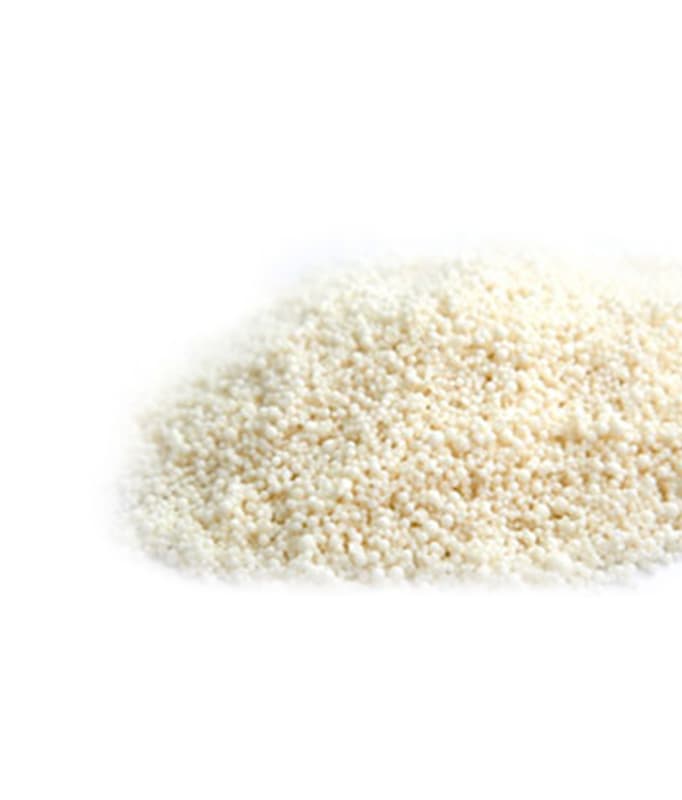
Filtration Media
Evolet 1 Liter
The most important factor in the development of bonds from ions on the surface. The surface encourages the growth of the bond. These bonds are also formed in normal water pipes. According to the “Brownian motion of molecules” a bond is created whenever a certain number of calcium and magnesium ions meet in a certain constellation. This creation of bonds is completely random. With the knowledge about these surfaces, we set out to develop a surface that the calcium ions would accept as a template and form into crystals. Critical for the development of crystals is the enthalpy.
R 2 368R 2 960
In stock
Description
Evolet Anti-Scale Media
Introduction Carbonate hardness: Our drinking water comes from the groundwater. This groundwater is constantly being added onto by rainwater. When the rain passes through the atmosphere, it enriches itself with carbon dioxide (CO2). Carbonic acid (H2CO3) is formed from the connection of H2O (water) and CO2 (carbon dioxide). Carbonic acid is the solvent of calcium. After the rain sinks into the soil, the carbonic acid extracts the calcium from calcium-rich stone. Through this process hydrogen carbonate [Ca(HCO3)2] is formed. This extraction process ends when the water is saturated with calcium. This means that the carbonic acid and the Calcium are in a carbonic acid – calcium equilibrium. Depending on the ground quality (amount of calcium and amount of carbonic acid) more or less calcium is extracted into the water. A real-life example of an artificial template If you have a saturated salt solution in a glass, no crystals will form. However, if you put a wool thread into the water, crystals will start to form on it. The wool thread functions as an artifi cial template, reducing the enthalpy and encouraging the dissolved salt to form a crystal. Descaling effect of the Evolet Anti-Scale media The Evolet Anti-Scale media also has a descaling effect on scale already present in old pipes, hardware, etc. The water coming from the media is saturated with free CO2 .Carbonate hardness in already existing scale are removed by this CO2 saturated water and slowly floating in the water. This way existing scale is usually heavily reduced or removed within 1 to 2 months. Learn More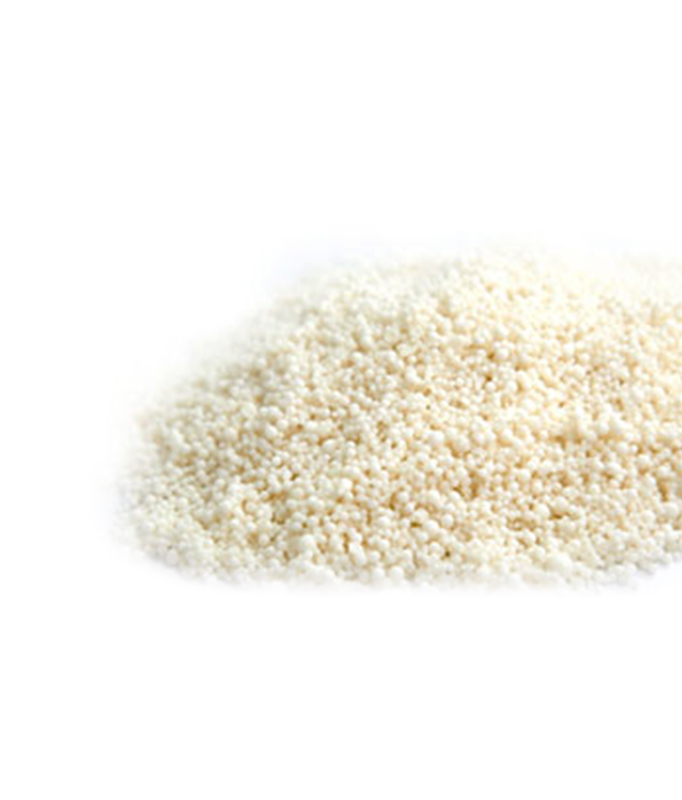 How does NSF Certified Evolet Anti-Scale Media work?
The most important factor in the development of bonds from ions on the surface. The surface encourages the growth of the bond. These bonds are also formed in normal water pipes. According to the “Brownian motion of molecules” a bond is created whenever a certain number of calcium and magnesium ions meet in a certain constellation. This creation of bonds is completely random. With the knowledge about these surfaces, we set out to develop a surface that the calcium ions would accept as a template and form into crystals. Critical for the development of crystals is the enthalpy. This is the energy required to form a crystal or a new layer of crystals. A very important development in the Evolet Anti-Scale catalyst is that the nanostructure on the surface of the catalyst decreases the enthalpy needed enough to allow all ions to form into crystals, even in cold water. Altogether, Evolet Anti-Scale media can be described as an artificial template that allows for all calcium and magnesium ions to form into harmless crystals. When the crystals growing, they lose their grip on the templates and are rinsed away with the water flow. Now new crystals can form on the template.
Lifetime
The NSF Certified Evolet Anti-Scale media works chemical, salt and maintenance free and has a lifetime of 2-3 years. The Evolet Anti-Scale media does not have to be backwashed.
Evolet Anti-Scale Media
Chemical formula and composition: Glass Coated Polymer
Mineralogical composition: Ceramic Template
Physical Properties
| Bulk weight | 750 kg/m3 |
| Specific surface | 270 m2/g |
| Colour | light yellow balls |
| Mesh size | 0.5-0.8 mm |
| Tolerance mesh size ∤ 0,3 mm | 3,0% |
| Tolerance mesh size ∥ 1,2 mm | 3,0% |
| Volume change in water | Max. 60% |
| Moister Content | 24-28% |
| Free board up flow | 60-70% |
| Service flow rate | 30-50 m/h |
| Design concept at 150 ppm | 2.0-3.5 liters per 1000 l/h flow |
| Design concept at 300 ppm | 3.5-6.0 liters per 1000 l/h flow |
| Operating temperature | 5°-70° C |
| pH Range | 6-9 |
| Media Lifetime | 2-3 years |
| Chemical free, no backwash, no valve, no electricity | |